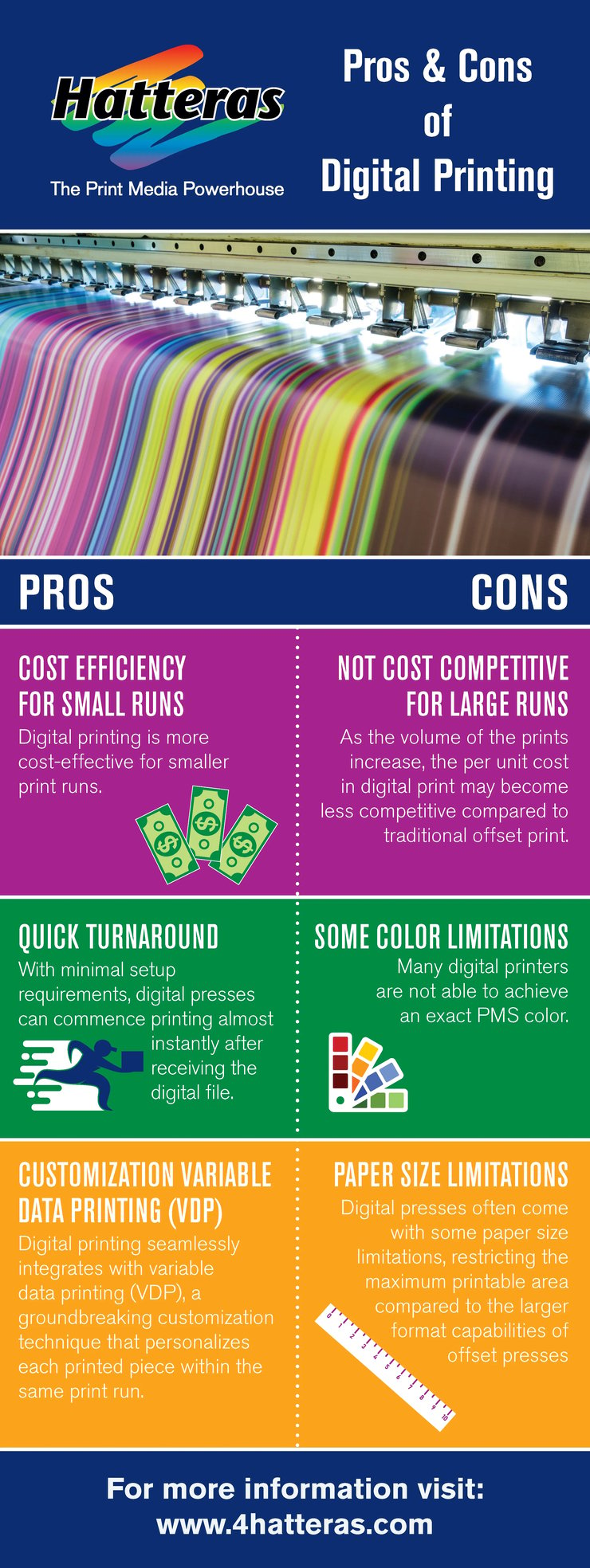
Examine This Report on Digital Printing
Table of ContentsOur Digital Printing IdeasRumored Buzz on Digital PrintingOur Digital Printing PDFsNot known Incorrect Statements About Digital Printing What Does Digital Printing Do?
Unlike traditional countered printing, which depends on mechanical procedures, digital printing utilizes innovative modern technology to create top quality prints. Among the key benefits of digital printing is its. Advanced color monitoring systems guarantee that the preferred tones are duplicated with precision. Whether it's a particular color of blue for a logo design or a slope of colors for an advertising sales brochure, digital printers stand out at precisely recreating these shades.The fluid ink or printer toner adheres evenly to the paper surface, causing dynamic and true-to-life shades. Uniformity is an additional significant advantage used by electronic printing. Unlike offset printing, where variations can occur because of factors like plate wear and ink density variations, electronic printers regularly supply top notch prints from the very first web page to the last.
Additionally, digital printing permits higher versatility in regards to modification and personalization. With variable data printing abilities, each published piece can be tailored independently with special text, photos, or styles without sacrificing top quality. Digital Printing. This level of customization opens new opportunities for targeted advertising and marketing campaigns and personalized interaction with clients

More About Digital Printing
With electronic printing, each print is produced individually based on need. Typical countered printing requires comprehensive configuration time prior to manufacturing can begin.
These procedures take in both energy and time resources. In contrast, digital printing has very little configuration demands. The procedure includes moving electronic data straight to the printer without the demand for plate prep work or shade changes. Consequently, less power is eaten throughout arrangement, reducing ecological influence. Additionally, since electronic printers do not require lengthy warm-up times like their balanced out counterparts do, they consume much less electrical power in general.
Digital printers utilize environmentally pleasant inks and printer toners that have lower levels of unpredictable natural compounds (VOCs) contrasted to typical balanced out inks. VOCs are chemicals that add to air contamination when released right into the environment. In addition to having reduced VOC material, many electronic printers also use water-based inks as opposed to oil-based ones discovered in countered printers.
The Facts About Digital Printing Revealed
Making use of green inks and toners in digital printing makes sure that the printing process has actually a minimized influence on air quality and promotes a healthier working atmosphere for printers and print store staff members. In conclusion, digital printing provides many benefits over typical countered printing (Digital Printing). It is an economical option that permits organizations to conserve cash on printing expenditures
The faster turn-around times given by electronic printing offer organizations the possibility to fulfill limited target dates and react promptly to market needs. Among the key benefits of digital printing Get More Info is its improved versatility and personalization choices. This enables companies to customize their published products according to their one-of-a-kind requirements and preferences.
A: Digital printing offers faster turn-around times given that it calls for marginal arrangement and preparation compared to offset printers. A: Yes, digital printing is much more environmentally friendly than countered printing as it minimizes waste and eliminates the demand for chemicals commonly made use of in standard methods.
Embrace the advantages of digital printing today and unlock its potential to improve your marketing initiatives. Note: The over final thought area has been created complying with the Get More Info given guidelines for a specialist final thought on electronic printing machine. Please note that some requested creating styles, such as slang, expressions, or colloquial language, might not be appropriate in this context.
Some Known Incorrect Statements About Digital Printing
Offset and electronic printing are both most popular printing methods for layout tasks. The differences in between them are comprehensive, from versatility and waste to the expense proportion of longer or shorter manufacturing runs. Typical balanced out printing and digital printing are valuable methods, each has benefits and disadvantages. Picking the better printing procedure will eventually depend on your job's certain needs.
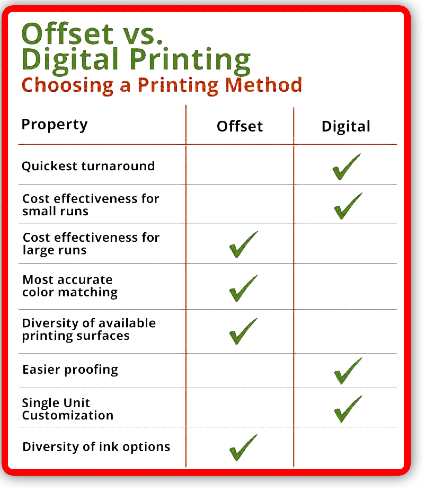
Although the tools's set up costs are high initially, extra systems come to be reasonably more economical as the quantity increases. Countered printing permits a large range of print materials to be used during production. It allows the printer to use different paper types, customized surfaces, and different inks. The high-grade images produced through offset printing make it the preferred approach, specifically amongst visuals developers, when seeking the best color reproduction, information, and professional-looking prints.
What Does Digital Printing Do?
For digital inkjet printing, ink is moved straight onto the surface. Rather than relying on light weight aluminum plates and rubber blankets to transfer a picture, electronic printing makes use of liquid ink throughout production.